

Utah’s construction industry can look to the long term, manage to the cycles
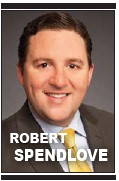
Robert Spendlove
 Construction industry professionals are experts when it comes to site preparation. They survey the area, test soil, design and define the plan, then develop timelines for execution and launch. The way the construction industry approaches its projects in the state of Utah right now likewise should include methodical planning that accounts for considerations in the current economic and market environment.
Following are several macroeconomic factors that can be considered in today’s construction landscape:
Economic Data Point to Utah’s Long-Term Potential
To balance the impacts of economic and market shifts, construction industry professionals can manage to the cycles. A long-term approach makes sense for construction in a state with economic data trending toward growth on several economic points. Utah finished 2022 with a fourth- quarter annualized increase of 4.2 percent in real gross domestic product. Employment in most Utah’s industry sectors grew over the past year, totaling 2.7 percent. Jobs statewide grew by 44,100 from March 2022 to March 2023. Utah’s unemployment rate in March 2023 was 2.4 percent, compared to a national rate of 3.5 percent.
Recently, Utah ranked No. 1 in U.S. News & World Report’s Best States rankings. The rankings team analyzes statistics tied to more than 70 metrics across eight categories, such as healthcare, education and natural environment.
“Buoyed by its top ranking in both the economy and fiscal stability categories, Utah unseated Washington at least in part because of consistency. The Beehive State finished in the top 15 in six of the eight categories measured by U.S. News, with a top 20 performance in another,” reports the May 2 article.
Kelly Peterson, Zions Bank’s executive vice president and commercial real estate director, believes now is a time for the industry to stick to fundamentals. “Construction is a long-term game. Yes, many builders are being more selective right now. Commercial real estate is cyclical,” he said.
The Beehive State’s diversified economy continues to be a source of strength through economic fluctuations.
Interest Rates Top of Mind
The current interest rate environment is top among construction business considerations. On May 3, the Federal Reserve raised interest rates by a quarter of a percentage point, taking the benchmark funds rate to a range of 5 to 5.25 percent. This is the first time the rate has exceeded 5 percent in more than 15 years. But Fed Chair Jerome Powell signaled that additional rate increases may be paused in the future, based on incoming economic data.
As the Federal Reserve raises interest rates, financing costs are increasing and may result in reduced commercial real estate demand. The average commercial real estate capitalization (cap) rate across all sectors — office, industrial, retail, multifamily, hotel and senior housing — began an uptick in the second half of 2022, according to the CBRE’s H2 2022 Cap Rate Survey released in March. Respondents expected cap rate expansion in 2023, but they also projected a slowing of expansion should the Fed end its rate hikes this year.
Costs Still Running High
Construction labor and materials costs have been running high, in part driven by the expansion of federal infrastructure projects and increased multi-family building. The Wall Street Journal cites this “building boom” as the reason unemployment is at its lowest level in 50 years. Nationally, construction jobs grew 2.7 percent from March 2022 to March 2023. Utah construction sector jobs grew by 5,900, or 4.6 percent over the same period.
But there are signs that the cost increases and fluctuations are moderating, said Zions Bank Real Estate Group manager Ryan Speirs. “We are no longer seeing the sharp increases we have experienced over the past few years. Supply chain constraints, transportation costs and labor shortages were some of the variables that have contributed to these price increases,” he said. “We have seen some improvement in these areas; however, costs have retreated only modestly given the backlog of projects still under development, despite slowing developer appetite in the current interest rate environment.”
In efforts to manage to the cycle, some commercial builders may opt to pause future projects until the economic environment stabilizes.
Residential Building Trends
Utah’s housing market trends impact the decisions home builders are making right now. A series of interest rate hikes aimed at taming inflation, including housing inflation, have altered the state’s housing market from a year ago. In spring 2022, the Beehive State’s home prices had experienced record growth, shooting up nearly 30 percent from the previous year. Now, for the first time in over a decade, Utah’s typical year-over-year home price growth rate has turned negative. In March 2023 the Beehive State’s typical home price was $506,072, 1.8 percent lower than in March 2022.
As higher mortgage rates cut into home affordability, fewer prospective buyers entered the Utah housing market. Homes stayed on the market longer, prompting some sellers to drop their asking price or accept lower offers. The Utah Association of Realtors reports a 99 percent increase in the number of homes for sale and a 22 percent decline in home sales from February 2022 to February 2023.
New Home Construction Trends
Rising interest rates have also slowed new home construction. Homebuilders obtained 2,537 single-family housing building permits for Utah in March 2022, compared to only 1,251 building permits in March 2023, according to the U.S. Department of Housing and Urban Development.
With existing homeowners locked into historically low rates, fewer existing homes are on the market, driving demand in new homes. To entice buyers concerned about borrowing rates, some home builders are getting creative with their offers, including offering short- and long-term mortgage rate buy-downs that are more attractive than 30-year average mortgage rates hovering over 6 percent. Attractive offers like these address the biggest concern among buyers and are helping builders move inventory.
In-Migration Continues
Demand for housing and office space may continue to due to the prolonged in-migration trends in Utah. The state’s population grew by 1.2 percent from 2021 to 2022 — three times the total population growth of the U.S., according to the U.S. Census Bureau. Utah’s population growth rate ranks 10th-highest in the United States. In 2022, the population grew by 38,141 people through net in-migration, according to the Gardner Policy Institute.
In January, not only did WalletHub rank Utah as the No. 1 best state to start a business, it later recognized our smaller markets. Four of the five top small cities ranked for starting a business are in Utah, according to an April 2023 WalletHub roster. As businesses launch and grow, they create more jobs and attract in-migration.
While new office construction may not be moving forward at the same pace as it was a few years ago, the strong population growth coupled with the state’s business-friendly policies suggests office space remains viable long-term.
Recession Threat Looms
While the U.S. economy eluded a recession last year, the threat of recession — which we may already be experiencing — persists. The Treasury yield curve inverted, meaning that investors are willing to pay higher interest rates on short-term bonds than longer-term ones. For the construction industry and other industries, now is a time of economic moderation. While this process may be uncomfortable, it is a necessary part of resetting an economy that has gone through many shocks over the past few years.
Robert Spendlove is Zions Bank’s senior economic and public policy officer. His monthly “Utah Economic Outlook” reports and other video presentations are available at www.zionsbank.com/economy.