
 At 10:28 on the morning of May 1, 1900, an explosion ripped through the Winter Quarters No. 4 mine near Scofield. Many miners died instantly from the blast, and many more in the connected Winter Quarter No. 1 died from toxic gases as they tried to escape.
At least 200 miners died that day. Every household in the town of Scofield was affected, leaving 107 widows and 270 fatherless children. There were not enough caskets in the state of Utah to bury all the dead — 75 had to be brought in from Denver.
At the time, it was the worst mine disaster in U.S. history and remains the fifth-worst to this day.
Almost 24 years later and 37 miles from Scofield, a series of three explosions killed all 172 miners who were working in the Castle Gate No. 2 mine.
Why bring up these tragedies — the two worst mine disasters in the history of Utah’s mining industry — in an article on mine safety? We need to show just how far the mining industry has come with regard to its safety record. Although there have been tragic accidents since Scofield and Castle Gate, we have not experienced anything of a remotely similar scale.
That is true of the larger mining industry in the United States, as well. Of the 15 largest mine disasters in U.S. history, all of them occurred prior to the Great Depression. In the year 1931, there were 1,688 fatalities in U.S. mine operations. In 2018, there were 27, the second-lowest number on record.
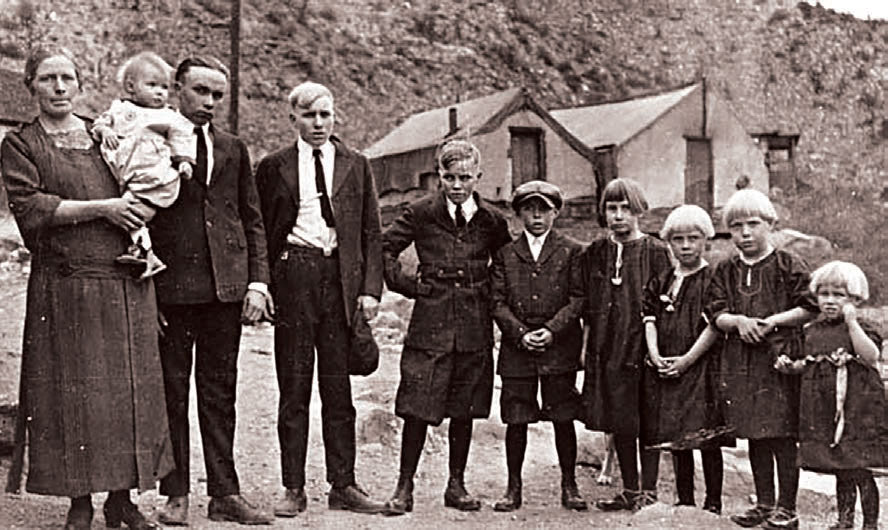
The widow and children of a miner killed when an explosion tore through the Winter Quarters No. 4 mine near Scofield in Carbon County prepare for the funeral. The disaster killed over 200 workers and left 107 widows and 270 fatherless children.
In just the past 30 years, the injury rate for in the mining industry — which includes both fatal and non-fatal injuries — has declined from 8.36 injuries per 200,000 employee-hours to 2.04 injuries per 200,000 employee-hours today.
According to data from the Bureau of Labor Statistics, in 2018, a worker was statistically twice as likely to be injured working in a retail store than in a mine. Workers were 53 percent more likely to be injured working in a hotel than in a mining operation.
The purpose in citing these statistics is not to minimize the dangers that workers in mining and service operations face. Mine workers face myriad of dangers associated with working with many types of heavy equipment, powered haulage, exposure to explosive and combustion hazards, chemical hazards, respiratory and ventilation hazards, electrocution, damage to hearing, musculoskeletal injuries, dangers associated with highwalls, landslides, rockfalls, cave-ins, flooding and many more.
That miners face these diverse and very real dangers every single day and still have a lower injury rate than a retail or hospitality operation is simply astounding.
This remarkable safety record is not achieved by happenstance. It is the result of extraordinary and unceasing effort. It is the result of mining and service companies dedicating the time, focus and resources needed to create a culture of safety — of “Zero Harm.” It is the result of companies taking the necessary steps to ensure that safety is instilled in employees, not just as a behavior but as a fundamental value, so that safety doesn’t just become an exercise in following procedures or rules, but a way of thinking that permeates all of an employee’s actions on the job.
The phenomenal improvements in mining industry’s safety record is also the result of significant and steady investments in safety systems and equipment, as well as the industry innovating new technologies to keep their workers safe.
Today, for example, we’re seeing the increased use of IoT — Internet of Things — solutions in mines. There are remote sensing applications such as motion detections systems in hard hats to signal possible medical emergencies in workers, fatigue sensors for haul truck drivers and proximity sensors for mining equipment. The mining industry has also been an early adopter and innovator in autonomous and semi-autonomous systems, including drones, robots, remote operation of powered haulage equipment and more.
Utah’s mining industry is extremely diverse. We have surface and underground mines that extract a large variety of base and precious metals, coal and industrial minerals. Utah’s mine operators use myriad mining techniques and equipment, and many mines are paired with extremely modern and efficient mills, smelters and plants.
Each mine in Utah has site-specific risk factors. The common thread, however, is their excellent safety performance and their ongoing commitment to promoting a culture of Zero Harm.
Liz Radley is the director of education and outreach for the Utah Mining Association.