
“Northern white” could soon give way to “southern red.”
Energy developers in Eastern Utah’s Uinta Basin and throughout the western United States and Canada engaged in the oil extraction process known as “fracking” need thousands of tons of sand to use in the controversial process. And the sand has to be just right. It must be clean silica sand with grains that are basically round, the right size and hard enough to withstand the extreme pressure inherent in the process.
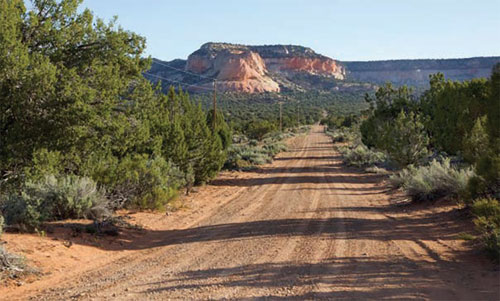
A site near a rock formation known as the "Red Knoll" north of Kanab may soon be the site of a mining operation from which red sand will be collected, processed and shipped to petroleum fracking sites in Utah's Uinta Basin and around the western U.S.
Today, that sand has to be shipped to Utah by train from sand mines in the upper Midwest, primarily Wisconsin. Known as “northern white,” the sand fits all the demands of the fracking drillers. The Wisconsin quarries, along with a mine in Texas, are the only major domestic sources of “frac sand.”
But that might be about to change.
A Southern Utah startup called Southern Red Sands LLC received the initial go-ahead earlier this month from Kane County officials to begin mining, processing and shipping “southern red” sand that it will mine just north of Kanab. The Kane County Planning Commission voted to issue a conditional use permit to the company and approved the sale of the water Southern Red Sands will need to process its product.
The permit issued by the commission list 48 conditions the company must abide by in order to minimize the impact of the proposed mine on the county. The conditions are standard procedure for new works on county lands, a commission spokesperson said. According to Kane County Attorney Rob Van Dyke, the site is on lands leased from and administered by the School and Institutional Trust Land Administration (SITLA), so that body still has to give its approval for mining to begin.
The mining process would initially take place on a 640-acre tract near a rock formation north of Kanab known as “Red Knoll” that Southern Red Sands has leased from SITLA, but sand miners hold about 500 mining claims on approximately 12,000 additional acres in the area containing sand that fits the fracking requirements.
Demand for frac sand reached as much as 60 million tons per year between 2012 and 2014, but has dropped off as oil prices have come down. Test have shown the southern Utah sand to be suitable — perhaps even ideal — for the fracking process.
Southern Red Sands expects the quality and proximity of its sand to the fracking operations of the West — especially those in Utah — will greatly reduce the costs energy producers pay for the crucial element in the process. A single bore hole in the fracking operation can require hundreds of tons of sand, which is mixed with fluids and injected underground to fracture rock formations and release the hydrocarbons they contain. Energy developers call a sand a natural “proppant” because it holds open the fissures created by the hydraulic fracturing process.
Currently, acquisition of sand is one of the major costs of the fracking process, with transportation from the Midwest to western drilling sites accounting for as much as half the cost.
As expected, some Kanab-area residents are concerned about the environmental impact of mining and processing the sand within about 10 miles of the city. Dozens of residents have attended hearings before the planning commission and city council as the bodies debated the permitting process. Additional concerns were voiced about the effect on the city’s water supply and the impact on the area’s vistas.
City officials have said that despite the protests, they expect the project to move forward. “Regardless of what we do here tonight, this project will go forth,” Kanab Mayor Robert Houston told attendees at a hearing before the council voted in favor of selling water to the mining company. “The ultimate decision will be made by the state engineer.”
Southern Red Sands officers said that the project would create about 40 direct jobs. Additional jobs will be created by trucking the products, which will be outsourced, they said.
Under the water agreement approved this month, Kanab will sell the company 600 acre-feet of water per year, one-third more than the project’s estimated use of 400 acre-feet per year. The company has made a separate agreement with the Kane County Water Conservancy District for an additional 600 acre-feet per year.
The 12,000-acre sand-producing area in Kane County could provide enough to meet the needs for Utah oil producers for 40 to 50 years, according to energy industry representatives speaking in May at Gov. Gary Herbert’s Energy Summit in Salt Lake City.
“We have some of the best frac sand in the country,” J.T. Martin, president of Salt Lake City-based Integrated Energy Co., told conference attendees. “We are calling this ‘Utah pink Champagne.’ The Wisconsins have nothing on us.”