

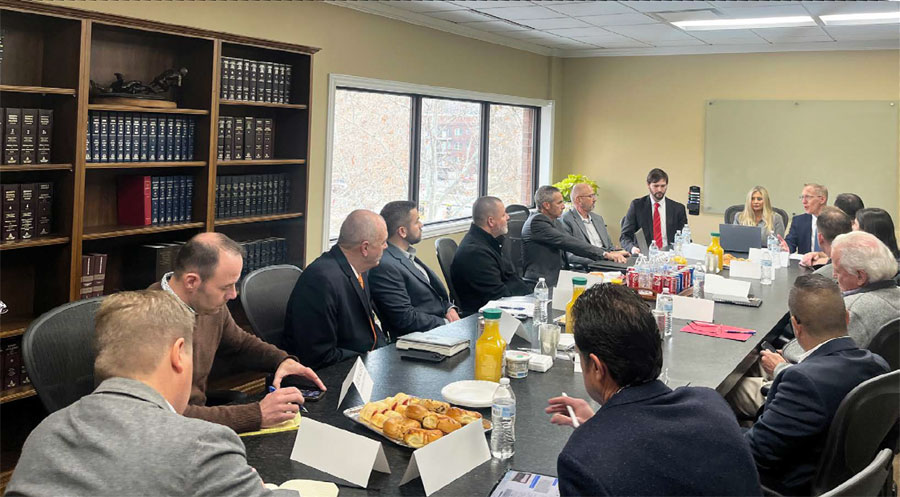
Conducted March 8, 2023 at the law offices of Babcock Scott & Babcock
PARTICIPANTS
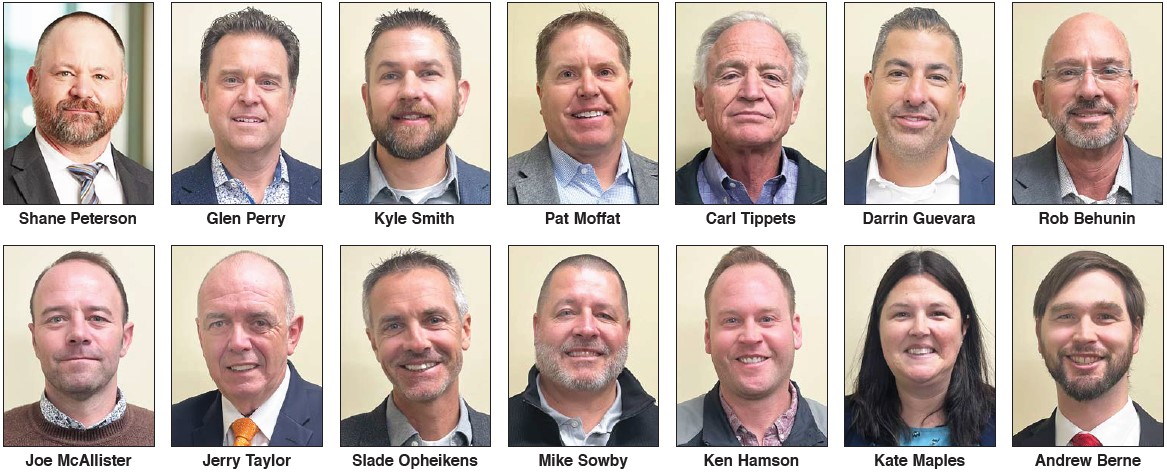
 Shane Peterson, Corporate Attorney, BHI Construction
Glen Perry, President & CEO, COP Construction
Kyle Smith, Area Manager, Granite Construction
Pat Moffat, Construction Manager, The Boyer Company
Carl Tippets, President, Pentalon Construction
Darrin Guevara, Executive Division Manager, Hunt Electric
Rob Behunin, Director of Business Services, GWC Capital
Joe McAllister, General Counsel, Hughes General Contractors
Jerry Taylor, Owner & CEO, JT Steel
Slade Opheikens, President & CEO, R&O Construction
Mike Sowby, General Manager, Sinc Constructors Co.
Ken Hamson, V.P. over Water & Waste, Whitaker Construction
Kate Maples, Estimating Manager, Mortenson Construction
Andrew Berne, Shareholder, Babcock Scott & Babcock, PC
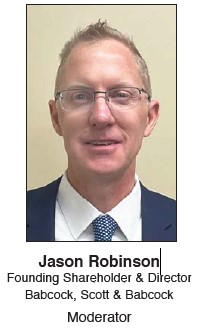
Jason Robinson, Shareholder and Director, Babcock Scott & Babcock PC, Moderator
Jason Robinson: Welcome to this roundtable on the status of the construction industry. Thank you all for being here. Jumping into our first question, what are you seeing in the industry? What are the positive trends? And what are your biggest challenges?
Carl Tippets: Getting a project started is the biggest issue right now. Financing and getting developers who are able to commit to beginning projects. Finding developers who want to commit to general contractors who, in turn, commit to subcontractors and then have them installed.
Andrew Berne: Pat, from the owner’s perspective, how do you feel?
Pat Moffat: That’s exactly right. I’ve talked to a lot of general contractors and subcontractors. We’re bidding a lot of work, but we’ve got a lot of backlog. Deals that made sense six, 12 months ago make a lot less sense right now.
We’ve had jobs in our own portfolio that we got all the way bid out, but when we get to the bank, they said, “Well, we’ll give you this much money at this rate.” And we just say, “Well, we’re going to hit pause on this.” Hopefully as an owner, we’ve communicated that and it’s not a surprise to anybody. We’re still trying to make stuff work, but it’s a lot harder to get stuff off the ground than it was six, 12 months ago.
Ken Hamson: One of the challenges we’ve seen is just being able to flip work, get through work and repurpose crews. It all comes down to resource utilization, whether it’s labor or material or equipment or whatever, to be able to use and manage those resources. Companies like ours are doing a lot of utility work. We’re doing 40 to 50 jobs a year. So if you can’t get the materials, get that work done, and get on to the next one, it really limits your ability to grow or even just sustain your volume. Jobs that should take 12 months, take 24. So while you might make money on the work, there’s a lost opportunity of not being able to take that crew and move on to another important project. I think that’s one of the biggest challenges we see.
Joe McAllister: One of our biggest challenges is our craft workforce development, getting the people and keeping them busy year-round. But on a positive side, I would say that DOT — being one of our biggest clients — is well-funded and consistently funded. That’s a positive trend we’re seeing in the market.
Berne: Darin, your thoughts on what the owners and the generals just described — the uncertainty of projects starting. How is that affecting subcontractors like Hunt?
 Darrin Guevara: What’s unique and different from years past is we’re not seeing just a general markup on commodities or equipment. What we’re seeing now is the need to really pinpoint things that we just can’t get because that issue could totally kill a project. If you have a deadline to get a project online in 24 months ...
Moffat: Get your electrical gear.
Guevara: Exactly! Get your electrical gear ordered right away. Now, if the owner wants to commit to that purchase, we have to design around the product that is already set and ordered, which isn’t typical. Then you have larger manufacturers and larger projects with owners buying out the manufacturers’ complete inventory for an entire year. That puts pressure on all of us with smaller projects and developments that we’re trying to get done. I have several projects where we rob Peter to pay Paul to get a job done because we can’t get this one part. It’s not like I can say commodities are all up and it’s delayed by X. It’s this one thing or that thing over there, which essentially could be a deal-killer. It’s a unique situation. I don’t see it going away for some time.
Robinson: Are the prices of those items going up, or is it just a supply chain issue?
Guevara: It’s not just one thing. Fuel obviously affects a lot of the industry. Diesel fuel is up almost 30 percent. It affects our bids. We’re losing money on the ones that we’ve already contracted on, and for new projects, the price is going up. Manufacturing items that are up, we can pass those on, but stuff that we’re contracted for, we’re just losing money on those.
McAllister: We’re in the third phase of this supply chain crunch. In Phase 1, stuff just wasn’t available. In Phase 2, we can get some stuff, but if you don’t order by Friday the price will go up 15 percent. Now in this third phase, we’ve all reacted to that reality.We’re not designing to value or to a budget, we’re designing to availability and lead time. Contractors order things very early and stockpile them. We’re renting storage units, even office spaces, to stockpile this material. Some store it well; some don’t, putting it in a non-climate-controlled area or just stacking it up at the site.
That’s the next wrinkle in availability. Manufacturers are refusing to be on the warranty hooks for two, three years while contractors are storing materials for half of that.
Some LED light manufacturers changed their warranties, so rather than it starting when you install it, it now starts when you order it. If you’ve been storing those lights for over a year and you want the warranty to extend out to where the owner requires it, there’s an extra cost for that, and sometimes it runs into tens of thousands of dollars. That’s a new challenge that has just cropped up.
Guevara: One positive from what’s been said, is that there’s better communication up front. We’re asking those questions and opening up the conversation for collaboration. How are we designing? How far out are these items? What alternatives do we have? Can we pre-buy them? What negotiation power do we have? Can the manufacturer hold them so the warranty doesn’t start? There are things that can be done, but it’s not the same for every product. I think the big positive is there’s more open dialogue happening up front on particular items.
Shane Peterson: We’re dealing with a lot of the same issues. You mentioned electrical gear — that’s a big one for us. We’re having to identify long-lead items way in advance, even before we’re awarded a project. The challenge I see as in-house counsel, is risk allocation in contracts. Who’s going to bear the risk of that long-lead item or the delay? Should it be owner-furnished equipment? Should the owner bear that risk?
It’s a difficult question, especially because it seems that the supplier, the one furthest down the chain, holds all the cards. How do you deal with that in your subcontracts for subcontractors who have long-lead items? It’s a potential source of delay for general contractors. Should they bear that risk? Are they in the best position to bear that risk? How are all of our contracts aligning to deal with that risk? It’s been a constant struggle. It’s important to figure out a way to come up with some integrated project delivery systems. Start thinking about the contracts and how they’re going to align from supplier all the way up to owner, especially when some of the parties aren’t willing to play ball, like suppliers. It’s been a challenge.
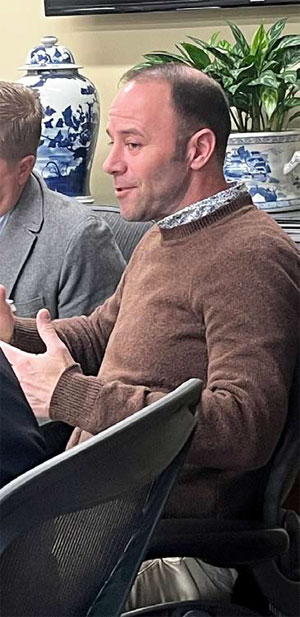 Slade Opheikens: Communication is definitely better across the industry. We’re talking to suppliers we would never have spoken to five years ago. We used to speak just with our subs. Now we're working with owners where we communicate up front about long-lead items. Two years ago, even one year ago, we would order the item, figure out the rest of the design, and then we would figure out the budget.
Two years ago, it didn’t feel like budgets mattered. Now with higher interest rates, budgets matter more. We are presenting owners with the problem that “we have to release this gear and buy this equipment, possibly six months before we know the price.” This causes difficulties for owners since they need to know what our price is going to be, but how do you hold a price? Banks aren’t as willing to take the risk of a cost escalation or force majeure contract clause that allows it to go up. We’ve started saying, “We’re going to give a price. We’re going to release the gear that we can. We’re going to commit.” Then, when the job finally starts six months later, our subs are like, “No, we’re out. We had three price increases. Concrete went up. Steel went up. Everything went up. We need to increase our price,” and we’re back to going, “Oh, my gosh. How?”
We’ve had higher interest rates, long-lead items, and shortages, but now it’s happening at the same time which is new to me and my company. But hearing from everyone here makes me feel better knowing I wasn’t the only one experiencing these challenges.
Moffat: As a private owner, I feel were really lucky in Utah because we have good GCs for the most part, certainly those in this room. It comes down to being able to pick up the phone and say, “OK, here’s our concerns. Here’s what we’re doing.”
So how can we improve the current situation? First, owners need to be realistic about what GCs can and can’t do. Second, GCs need to figure out that budgets are important, and communication is key.
Tippets: I agree that communication is the solution to almost all of the problems we’re addressing. We had the luxury, in the construction community for a long time, of starting projects with just enough information to really get going and get momentum. Then as a general contractor, we were probably too slow buying projects out.
If it’s a 24-month project, it may take 12 months to buy it out because things you don’t need up front, you just procrastinate. Having all the information up front to where you can get it done, get the buyout done, get everything ordered, is becoming critical.
The designers, owners and contractors communicating about all of that up front, before you ever put a shovel in the ground, is paramount to anybody succeeding at this point.
Robinson: I agree, communication is key. In real estate the mantra is location, location, location. In construction law and litigation, it’s documentation, documentation, documentation. I’m convinced if there were better communication in the industry, there would be fewer and fewer disputes — then I may be looking for a new job. Communication is key.
Carl, what are you doing to promote effective communication or is it just coming naturally?
Tippets: There is much better communication between owners and contractors than there used to be. Vital communication is happening up front, with owners and with designers. Preconstruction services are becoming an important part of construction.
The design/bid/build model for procurement is becoming outdated. It needs to be a design/assist or design/build model, either/or, up front to where you can get everybody engaged in those conversations.
Berne: Rob, as an owner, what are you seeing regarding communication?
Rob Behunin: It’s similar to what’s been said. We have a project in St. George that for the last 24 months has had a water system issue with the parts stalled in Germany and France and everywhere. But what really kept everything going is that communication with the contractor. But I’m going to add the another “C” word — “creativity.” There’s a famous quote, “Creativity, when you use it more, it never runs out.” You create more, the more you use it.
As an owner, I’ve seen this with our contractors and our subs. Everybody is willing to get to the table and figure it out. In this industry, there’s a lot of creativity around the table and when we pull that together, we come up with some really interesting solutions.
Tippets: I agree that creativity is a huge part of the solution. But owners tend to look to the experience of the construction field, relying on the general contractors for that creativity as opposed to the design team to come up with those solutions.
Behunin: I agree. What we’re doing is an art and a science. It’s about relationships, communication and creativity. But there’s a science aspect to it that I just don’t have. To those of you actually doing the work — I wouldn’t dare tell you how to do your jobs. We have to rely on you to help us bring solutions and some of the solutions you’ve come up with have been phenomenal. We’ve been able to go back to the LPs, back to the finance, back to the money well, and say, “Hey, we have a solution to X, and we want to move forward.”
We’re going to come out of this, but to do so, we’ve got to get creative. So I’m going to repeat myself: “It’s an art and a science.”
Berne: Mike, what are you doing to be creative?
Mike Sowby: I echo what Carl said about owners looking to the contractor for solutions. Designers don’t know the costs or the availability, whereas the contractors are the experts on costs and availability. I’m seeing general contractor teams interacting with our teams on a closer level to come up with those solutions for the owners. We’re also getting a lot more cooperation with early order and prepurchase items. I’m the landscape guy, the last ones on the job. We’ll submit a pay request for the first draw of the project, and inevitably it comes back, “Why are you billing for landscaping? That’s not for another 36 months.”
“Yeah, we know that, but we are contractually obligated to begin procuring materials and so that’s what we’re doing. Here’s what we’ve got. Here’s what we’ve found. You need to buy it now because there’s going to be a price increase next month and another in July, and who knows what happens next year?”
We’re getting a lot more cooperation between all parties involved. It’s been an uphill battle in the past, but we’re seeing it become a bit more the norm.
Jerry Taylor: For us as a subcontractor, the design and design team are everything. As a fabricator, if we had more complete drawings, we could save you weeks and maybe months on your project by having the steel ready to go. With completed drawing, we could turn it over to our detailer, get it out, get your approval and get back. We could fabricate it quicker than you can draw it. And all those little questions you think, “Oh, that’s no big deal. I’ll put it off 'til tomorrow.” That means days and sometimes weeks for me. The design is a big deal.
Opheikens: To what Jerry’s saying, in our contracts we now ask clients to expedite submittal reviews. We have to get away from the whole electrical submittal being 100 percent before the electrical engineers can review it. We need to be able to part and piece out submittals. For structural submittals, we request a meeting with the structural engineer, the fabricator and everybody affected to expedite the approval. We can’t take three weeks like they have done for 20 or 30 years.
I learned the hard way on electrical gears, they don’t actually order it until the submittal is approved. I can give you an early release. I check a box on my schedule, the lead time started, and then I find out, no, that’s not until the submittal comes back approved by the architect, by the electrical engineer that they can actually give them a go. So, how do we do it in three days, not three weeks? By not rejecting it because someone spelled “the” wrong or some stupid thing. You laugh, but sometimes they look for why they can reject it instead of how they can approve it.
McAllister: Everybody has to figure out what their real interests are. If owners don’t want contingencies in their bids, then they need to be very clear in their drawings and solicitations. Contractors have to put contingencies in their bids, but owners don’t want to see them, so we leave them out and figure we’ll work it out later. All we can do is identify a risk and mitigate it. So, we give allowances. That’s really all we have to do, and, of course, owners don’t like that because prices go up, prices change. Everybody needs to be on the same page. What is our priority here? We need to know what the owner’s interests are up front. Owners can either pay the price up front to get great plans, or they can have some contingencies. It’s their choice. It would be better if owners, particularly through their design team, could just state what their interests and their priorities are for this project?
Kate Maples: I think over the last five to 10 years owners have been more open to bringing the GCs in early, which is great. I think it’s on the GCs to get the trade partners involved earlier to help influence the structural design so as not to have those problems at the end of the day.
Going back to creativity and diversity, the way to come up with more creative solutions is to get more diverse opinions in the room. Whether it’s the new generation, new blood, people of color or more women in the room, I think with a more diverse team, better ideas will come out of all those meetings. I’m a big advocate for diversity.
Robinson: I think it’s wonderful, as well. How do we get the next generation more interested in the construction industry? How do we increase creativity via diversity?
Maples: I think a big piece of that is education. And not just going to high schools and telling them about career opportunities in construction, but all the way back to elementary school. I think studies show that kids in third grade have already started to form opinions about what career they want to go into. So it becomes crucial to really reach out to the youth, not only in the suburbs, but in the rural areas and in the city. It’s all about education.
Glen Perry: I think it comes back to creativity and also collaboration. We still work primarily in a hard-dollar-bid public works environment, so we’re not seeing the same collaborative process that a lot of you are talking about because it still comes down to price. We have to give a price that we must hold to for two or three years, and work through those challenges.
But a more collaborative environment will attract people to the industry.Young people don’t want to fight all the time like I did early in my career. They want to work as a team, get creative and solve problems as a group with an engineer and an owner. Even on the public works side, we’re starting to see owners communicating about what is the driver behind this project? Is it schedule? Is it increasing capacity? Is it needing a discharge permit from a wastewater treatment plant? It’s becoming: “Let’s talk about the purpose of this project so that we can then manage to that purpose, instead of just managing the number of calendar days in a contract and end up fighting over LDs.”
On one of my first jobs in the industry in 1993, there was a question on LDs and we asked, “What are your damages? Liquidated damages are the recovery of damages. You don’t have any damages because this project didn’t increase your capacity. You can’t sell more water than you thought you were going to sell. Let’s talk about what your actual damages are. Or are you just charging these because the contract says you can?” It ended well and we came to an amicable solution, but I think there needs to be more of those conversations. And with a more collaborative process, you’re going to attract more people to the industry because it’s fun to work together as a team. That’s the message that’s going to attract people. Other industries do a better job of selling themselves; we need to do better.
Guevara: I love this generational talk because we have a real problem in the construction industry, with generations aging out and less coming in. It’s even a bigger problem with immigration reform and getting workers that can come into the states to work.
We have to understand what drives the younger generations — what are their “whys?” What are the whys behind them wanting to go to work? And unless we’re touching the whys behind what motivates them, we’re never going to get them to stay.
I just did a training on communication with 150 of our leadership foremen. I started with the parable of the brick layers. We discussed what are teaching your guys? Are you just teaching him how to lay bricks quickly in order to feed his family or are you teaching him to build a cathedral? And they’re like, “OK, how does this relate to construction?”
But it is reality, what are you doing on a daily basis to help motivate them, to get them involved, to have them be problem-solvers and solution-makers out in the field. There was a lot of “ah-ha” moments with our foremen going, “OK, I can get more performance. I can get better guys. I can get them to help create solutions to the challenges that they face on a daily basis in the construction field.”
McAllister: Our superintendents often complain, “You’re sending me people that don’t know what end of the hammer to swing.” A lot of kids don’t grow up on farms, working on equipment, framing houses in the summers, or taking ag mechanics in high school, so we just have to take what we’ve got and coach them, and make them into good employees and construction workers.
We had a guy that would bring the new guys in and instead of saying “What do you know?” he would just start at the beginning. Without being obnoxious, he would say, “Let me show you how to use this shovel,” and he would literally show them how to hold and use the shovel appropriately. Nobody was offended by it. He just kind of said, “That’s okay if you don’t know how, I’m just going to show you.” It’s on us to develop our workforce — whoever we get.
Peterson: It was career day yesterday, and I dropped my 14-year-old son at an excavation site. He had discussed with me how I became a lawyer and stopped doing excavating, but I tell him I’m still in the construction industry. I mean, it has to start at that level, right? He’s in eighth grade, and I wonder, what we could do to better communicate to this group the opportunities available in this industry. BHI has a scholarship program to get people interested.
Just thinking, starting with the people sitting at this table, think of the possible career paths in the industry. I’m not just talking about trades like electricians, concrete finishers, excavators, etc. I mean, I’m sitting here. I’m a lawyer. I’m in the construction industry. The industry needs business owners, business managers and other vocations. My son was probably the only kid in his school that was interested in going out and standing in the mud on an excavation site.
With so many different opportunities in this field, I just wonder if we do a good enough job of making that known in colleges and in our schools. BHI invests a lot in UB Tech out in the Uintah Basin. Utah has some of the best construction management programs, in fact, the best construction management programs in the whole country. BYU, I think, is No.1, UVU is No. 25 and Weber State has a strong construction management program. We should really be a model for the whole country, here in Utah.
Hamsom: I’m seeing a shift in that, too. When I got out of high school, if you didn’t have a college degree, you couldn’t work anywhere that paid you more money than working construction. Twelve years ago, we had college graduates who couldn’t get a job and were looking for whatever they could find. And we’re saying, “OK. Go to college, go to college,” instead of the trades. I think that’s more of the push we need to make. College degrees are awesome, but you can make a really good living doing construction or trade work.
And even though we’re catching up as far as wages, our industry may get to the point where we have all these projects with no one to do the work because they are doing programming or whatever. They don’t realize that they can make just as much money, if not more, building cool stuff.
Kyle Smith: I think you’re spot-on. We need to change the perception of getting a college degree versus going into the trades. Right after high school, you can go into an apprenticeship program, getting paid on the job and not incurring college debt. You can work high-paying, family supporting jobs, Day One. This is the misconception of college versus the trades.
McAllister: To Kate’s point, we just need to find the right people, bring them in, nurture them and have this conversation. I have this same discussion with HR all the time. I say, “OK, we’re going to have a big party in the neighborhood, with food, games, and everything. Everybody’s invited, all the kids.
We also hire every female project manager we can find. They’re incredible, but there’s not that many. We just need to bring more of them in. Any efforts to get parents involved exposes their kids to the construction industry, and those kids are our future pipeline.
Not many of us, old rich white guys, have kids that want to go into construction. We have to expand our player pool because that next generation of laborers, project managers and estimators — they are our future.
Taylor: I’m the owner of JT Steel in West Jordan, but I live in Southern Utah and I’m involved heavily in Southern Utah. There’s a technical high school starting up there and it’s going to be amazing for kids that want to go out in construction. We probably need one of those in the Salt Lake area.
Robinson: The whole high school is dedicated to construction?
Taylor: It is. It’s a technical high school.
Perry: We didn’t get to this point overnight. Right? We’re not going to fix it overnight. It took a couple of decades for us to erode to this place of moving away from the importance of the trades.
We have an office in Montana. The Montana Contractor’s Association is doing a thing called “Build Montana.” It’s not the same as “Build Utah,” which is more of a PR campaign. “Build Montana” is a grassroots effort in the high schools. This year there are 14 kids in “Build Montana” in the Billings market. They come to our jobs, they do a field day at our office, they run equipment, we put them in the back 40 to dig holes. They’re getting excited about the construction industry as a career. We tell these kids they can start out making 28 bucks an hour as a laborer who doesn’t know anything. They look at you like, “I can make what?” I mean, it’s big numbers. It’s grassroots, but it’s going to take time.
Behunin: To Jerry’s point, that high school — when they took subscriptions for people to sign up, it was oversubscribed. They had to shut it off at 7 or 800, I think. We talk about tactics and how to do this, but we really don’t have a comprehensive strategy like Montana, at least not yet.
McAllister: Unfortunately, we’ve engineered to this result. And what frustrates me, and probably all of you, is that a few years back our legislature made it clear to our immigrant labor pool that they’re not wanted here. The E-Verify requirements have reduced availability and unfortunately created a system of indentured servitude. The folks that worked for companies when the legislature modified it, still work for those same companies. They’re not free to go to Big-D or to Okland or anywhere else and get hired because they can’t pass E-Verify
We did the same thing with “Everybody should go to college.” We made sure that every one of our school students were aiming for college and not for other types of careers that could also sustain their families. It’s really a policy matter. Getting rid of unreasonable restrictions on our labor pools and accepting the reality of the times is something that the industry has been hesitant to take up, but it needs to. I think attitudes about our immigrant labor pool have evolved and matured. But it’s going to take a concerted effort from the construction industry to go to the legislature and say, “You’re killing us.” We need to cross this bridge between now and the future labor pool we need to generate. Because, in order to do these projects and this work, we need these folks.
Peterson: It’s really a federal issue. We’ve attempted to address the immigration problem. And I don’t know if anybody else here has tried to tap into the immigrant labor pocket, but it’s an insurmountable hurdle. Like all of you, we’ve experienced labor shortages, and we’ve had immigrant laborers working for us that we really liked, and we’ve tried to see if we could tap into that resource. It’s just not feasible. Until the federal government decides to change its immigration policies, I think it’s going to be an impossibility.
Taylor: We allow immigrants to come here, we put their kids in school, and we give them services throughout, yet we can’t hire them. I’ll bet you I have at least one person a day that walks in, but the minute they see that we E-Verify, they walk out. We could otherwise hire lot of these guys as good, skilled laborers that could benefit our company, but because we E-Verify, they’re gone.
McAllister: The irony is it’s illegal to deny an unauthorized immigrant the right to open a bank account, or to deny them a home loan. We have rules that protect them and make sure they can access financial and government services, which is what we should do. But it is illegal to hire them if you want more than 14 employees. And we know people are getting around it. You’ll see subs show up with 14 Central Americans and go to work. But if you want 16? Nope. We can’t do that.
Peterson: There’s also the stigma of the professionals versus tradesperson. Even though a tradesman can be in a specialized trade, you’re more able to bring over an engineer than an electrician, for example. It’s a tough deal. I don’t see any real good solutions to it.
Tippets: Nietzsche said those who are seen dancing in the rain were thought crazy by those who could not hear the music. As an industry, we’ve done a poor job of playing the music loud enough for people to hear it, including age, ethnicity and gender. We’re not reaching out enough to make it the appeal that it once was. It comes back to everything discussed here today. Collectively, we need to do a better job of cranking up the volume, because construction is a pretty neat place to be.
Perry: By nature, we’re problem-solvers. We get creative when we problem solve. When the problems get tougher, we just find a new solution. But that’s hurting us in one sense, because we don’t talk about it, we just keep solving it. We keep taking the load and fixing it and taking the load and fixing it. At some point, you gotta hit timeout and say, “Guys, we can’t fix it anymore.” We’ve got to get louder.
Robinson: Switching back to challenges the construction industry faces, I’ve seen so many articles lately about construction site theft. Is that an issue that you guys are facing? Or is that more on the residential home building side of things?
Sowby: Only during the week and on weekends.
Robinson: What are you seeing in terms of construction site theft and what are you doing to help thwart it?
Tippets: It’s a budget line item now.
Opheikens: I’ve had three projects where our switchgear breakers were stolen — stripped completely out. And you don’t get replacement stuff for a long time. When anything becomes a hot commodity or long-lead item, it gets more targeted. That’s been our biggest recent thing. We’re putting cameras up now.
Moffat: As an owner, we usually carry our builder’s risk policy. And, the lion’s share of the changes are probably due to some of the fires and everything else going on. Five years ago, we weren’t doing any of this. Now for prevention, it’s fully fenced job sites; it’s cameras; it’s security on site; it’s all sorts of things. And I can’t help but wonder if that’s a direct response to some of these issues. As an owner, we’re paying a lot more money than before to implement some of these cameras and security. Hopefully it’s helped us and our job becomes a little safer, but it is a direct cost.
Berne: What about cybersecurity issues or wire fraud? Are you seeing pay apps being stolen or anything like that? And what are you doing to address those issues?
Hamson: I haven’t seen that one yet, thankfully.
Behunin: We bought insurance.
McAllister: It happens a lot, with the biggest issue being business email compromise, which has really been a surprise to us. It’s an engineered attack where they check our emails, see what’s going on, and then they create a spoof site that’s one letter off of ours. Then they send an email to the owners’ team that says, “Hey, we want to change our routing information — send the payment here.” I’m aware of owners who have gone through this. The first one I heard about was a payment of $1.4 million. It’s a huge, huge risk to the point that we do not accept electronic payments anymore. It’s in our contract that we will only accept a paper check and it will be mailed to our office or we’ll pick it up. We do not accept any electronic payments because they are so easy to divert. We learned that in the Intermountain region, about $600 million has already been stolen through business email compromise scams.
Moffat: Take that internally, our CFO got an email from our CEO that says, “Hey, will you wire …?” We have it happened all the time, just yesterday even.
McAllister: Go buy some gift cards and then tell me the serial numbers so I can send them to the guys in the field. We’ve had that happen. It’s a massive cost to the industry and a massive risk. We’re at that point where we cannot guarantee the safety of electronic payments. It’s just too risky. Nobody at our company is authorized to change our mailing or routing information during the course of a project. Even one $1.4 million stolen payment could kill a project. It’s the biggest risk we face. Our IT guy told me that 90 percent of the emails that hit our server are spam or malicious. We’ve had to disable all communications that originated from certain IP locations. Some people try to email us, and it gets blocked, but that’s just the way it is. It may be archaic, but pick up the phone and call me.
Sowby: I had an employee call me a few months ago, and he opened the conversation with, “Is it you I’ve been talking with?” And I said, “When?” And he says, “This morning.” I said, “No.” He says, “Well, I’ve been exchanging emails with you.” I said, “No, you haven’t.” Somebody posed as me, asked him to go to the bank and transfer some money to another account somewhere. It was very believable because the email looked like it was from me. I am glad he called and verified. That’s something to communicate to employees. Like, “Hey, let’s have a face-to-face conversation if anything like this comes up. Don’t just proceed.”
Robinson: Speaking of technology, are there positive trends that you’re seeing in technology? Are there things that technology is helping us with?
Opheikens: Everything is electronic now: plans, drawings, submittals. A lot of our efficiency has greatly improved because of these things. From our legal side and from our marketing side, we see the potential, but I don’t see it swinging hammers and laying bricks yet. I don’t know.
Mortenson is kind of larger and out there globally. Do you guys see anything happening on that front? Maples: I think the biggest thing is just being able to design for manufacturing. We call it DSMA. You know, typical commercial construction jobs aren’t really built in such a way that you can take away the person swinging the hammer. But we build jobs where we have shipping containers that are hotel rooms. They show up with the sheets on the bed and we put them in place. It’s that kind of pushing the envelope that I think is really fun and will eventually make its way more and more into the industry. But it takes people willing to try and willing to fail. Not everything is going to work, but our mantra is if you want to try something, just fail fast. Don’t dump a ton of resources into something that’s going to fail. Fail fast and try it out.
Sowby: Are you talking about modular building with the hotel room that shows up with sheets on a bed?
Maples: Yeah.
Sowby: I think that’s going to be a big deal going forward.
Smith: COVID forced us to embrace technologies that we resisted before, made us more efficient. That, coupled with resources like Draft Workforce, our plan sites have gone to automation. Scale houses are now completely computerized with a weighmaster in one location with on-site pits. So just all kinds of automation within the plant site itself. We are embracing technology that has been forced upon us by external factors.
Hamson: We all laugh about the Teams scene, but there’s a negative side too. I feel a lot of our craft guys or field guys miss the in-person stuff — the collaboration they had with each other. They get isolated on projects and now they don’t speak with each other as much as they used to. There’s a lot we’ve lost with that, but we’ve gained a ton, too. I love all the owners, but I am excited I don’t have to drive to their office to meet with them once a week. Now, we just call in. It saves a ton of time, and we get a lot of things done a lot faster.
Moffat: Electronic bid openings — we save a ton of time with that. All the small municipalities have gone to that. It used to be hard when you had three bids in a day and you’d drive from Brigham City to Provo. Now you can do all of that from one spot.
Guevara: It’s hard to keep up with the multitude of options we have from all these abilities and software, but it’s also how we utilize it. One thing that we do is design in 3D, and then we’re able to prefab those products on site. It gives us the ability to use labor that’s cheaper, safer, highe- quality, reduce waste, etc. That’s one of the “whys” behind getting the younger generation involved; they want to know that they’re having an impact in a greener company.
Another challenge we face, our go-to market is primarily design/build, although we joke that it’s build/design, because we’re out there building as the design is happening. And what we need to understand is how to utilize these new tools and software to slow it down, on the back end or the front end, and make sure everything is completely coordinated. Whether it’s BIM or other resources, we need to know that when we get to these sites these issues are already resolved.
An example of this is a project where our AV guys are influencing the truss design. It just came up last week and goes back to the client’s experience of wanting to make sure everything is symmetrical and looks great, with the TV, the speakers and the lights. Instead of getting to the site and going, “Oh, I know you only had 4 1/2 inches.” Which used to mean back- tracking, more submittals, more approvals and ultimately delays. We can utilize this software and these tools if we just ask the questions and say, “Let’s really dive into this because it’s been an issue in the past. Let’s solve it on the front end.”
Robinson: Do you find that subcontractors are amenable to using BIM? Are they up to speed on that?
Guevara: We are. You mentioned a different solution. If you’re going to get a team that’s OK to design and share profits on a project, then all those team members have to be at a certain level to understand how to use BIM and how to influence a project. Because if I can do something to help save you a little bit of time, it’s
for the greater good. Design/build was tough at the beginning to get accepted, and there’s other new models coming out that may pose a big challenge. Utah is kind of young versus an East Coast or a West Coast. But I think we’ll see more of those trends in the future.
Moffat: UDOT is pushing model-based design with BIM on a lot of their projects. It’s paperless and the design is entirely the model starting in the bid phase. Getting subcontractors on board has been a challenge. We’re working through it, but it definitely adds time up front to bring those people up to speed and get them in a place where they can have the right tools and information to bid their projects.
McAllister: There’s a dichotomy between a certain level of sophisticated general contractors who are in the digital age, and many of the subcontractors who are still in an analogue phase and view technology as an expensive toy. “It looks neat, but just let my guys get out there and they’ll figure it out.” They are late adopters to the extreme because it’s a sunk cost to them, ultimately.
Berne: Mike, as a sub, what would you say to generals and owners that you think could benefit the industry regarding utilizing technology?
Sowby: You asked the right guy because landscapers are the last guys in. We cause the most problems. We are the least sophisticated, and on and on. But that’s why I think our company has been able to forge great relationships with GCs because if you’re just above average, and we think we are, it’s really easy to stand out. We embrace technology. We’ve been early adopters since Day One. That’s one of our mantras that’s helped differentiate us from our competition — to be able to speak and play at the same level as the GC.
Speaking of design/build, we get thrown into some interesting situations. All of you know what a green roof is and have seen landscaping on structure. That’s one of our specialties. But there’s a pretty big disconnect between where the water-proofers and mechanical guys leave off and we step in. We don’t do waterproofing. We don’t do the drainage. We don’t run the piping through the building. We’re not licensed to do that. But we often find ourselves advising owners and general contractors how to build this and how to detail it out. Architects don’t know because green roofs and this kind of thing are relatively new to the market. The details that we’ve come up with just from a lot of bad experiences are better than what the architects are putting out there, and that’s a difficult line to navigate because you don’t want to offend an architect. There’s a cooperation and collaboration that needs to happen between mechanical and roofing and waterproofing. So what you’re saying about the AV guys influencing the trusses — we’re seeing that a lot with landscape stuff, and it is quite surprising.
Robinson: Mike, I’d be curious to know, as a subcontractor, when you present a contract with a price escalation clause or the concept of price escalation, how is that received? How does that conversation go?
Sowby: As a subcontractor, we don’t get to dictate the terms of the contract. The general contractor issues us the contract, and we can redline it to an extent, but our hands are really tied. They do have some things in there that protect everybody, and when we hold a contractor accountable for what’s in the contract they issue, we tend to have a lot of success.
Moffat: From an owner’s perspective, a few years ago, there was not even a conversation about escalation. It was, “Hey, look. Bought it out. Here’s the price. Let’s go.” Now, we are dealing with escalations on every project. It all goes back to communication. We like to OK it and include in some escalations, but we want to know what you’re carrying escalations for. Because if you’re carrying escalations for foundations, I’m not sure that I agree with that since you’re going to buy it out in 60 days. But roofing — you might be right. Asphalt — you might be right. Roofers won’t contract 18 months down the road, so obviously that makes sense.
But, let’s talk about what that number should be and be able to have a conversation on what, how, why. Not just a blanket — “Well, this is 8 percent escalation. We’re putting it in because that’s the market we’re in right now.” We need to understand. We like our GCs to tell us, “These are the items that we think are going up. This is why we put in escalation. Hopefully we don’t use it all. These items are locked in. Let’s react accordingly, together.”
Behunin: As the other owner in the room, I was going to say that it’s a very defined sort of punch list. Just a hierarchy of things that we anticipate would cause an escalation, and talking about it early resolves those problems.
We know there’s going to be some, but there are other things that just don’t seem to make sense. Work with us up front. We’re really willing to make those adjustments because it’s going to happen to us as well
Berne: Kate, how is it for you as a general to try and get those escalations or deal with them if you haven’t put it in the contract?
Maples: Our approach is to be as open and honest as we can. Instead of just smudging a percentage across the entire job, being intentional about where the risks lie and agreeing as a team on what escalations to carry. Whether the owner wants to carry it and it’s his risk, or we want to carry some on our side of the fence. I think just being intentional.
Cost indexes can show what’s been going on for the last several years, so it’s not like we’re blind to what’s happened. We certainly know where things have gone, so it should be possible to pinpoint some of that risk and just agree as a team with what’s best for the project.
Perry: From the public works perspective, it’s all over the map. You have some owners that are more professional and have updated contract language, and then a lot of the small cities and towns, it’s the old “give me a number and build it, and we’re going to fight about anything that changes.”
Some of the more professional owners prepurchase some of the longer-lead, commodity-priced items, like PVC-type stuff, wastewater systems and pumps, or at least pre-negotiate that price and take that risk away from us so we don’t build in the contingencies. But it’s not consistent.
On the escalation side, same comment; we don’t have the ability to change our contracts on public works projects. We don’t have the ability to redline a contract. It’s “You want this job, you’re going to sign this book. That’s that. If you didn’t want to sign it, then you don’t need to do the job.” So you just have to learn to manage the risk.
Robinson: Contracts are all a matter of shifting risk and dealing with those gray areas. As my friend Joe McAllister likes to say, “From an attorney’s perspective, when it comes to contracts, gray is green.” We like gray.
McAllister: As a general contractor, we have encouraged owners not to make major changes to the contracts as far as escalation goes because flow-down provisions apply to all of the provisions, and I don’t want to see escalation claims. I don’t want to just open the door and tell everybody, “Hey, don’t worry about working with your suppliers and your internal folks to keep costs under control because we changed the contract to make it easier for you to send those up to the top.” I’m certain the existing contracts are perfectly capable of dealing with cost escalations. If it’s a true escalation, a true change, a true force majeure, contracts can deal with that. Just because they’re more frequent and more spread out among the different divisions, it doesn’t change anything about their actual nature. Contracts that existed prior to the pandemic are perfectly capable of dealing with those issues. It’s just that everyone thought it wasn’t going to happen to them.
Robinson: We’ve talked about work-force development and about how we get the word out to the younger generation. Let’s end our discussion with any practical advice you would give to the younger generation, just starting out in the construction industry, about how to be successful
Hamson: We touched on it earlier with college. I worked full-time while going to college. The construction management program was tailored to guys working full time. It took me five years to do college, but I didn’t have one dime of debt. Whitaker paid for the majority of it through a scholarship-type program that we have. I had money in the bank, and at the same time, I got five years of practical experience. I was essentially a full-blown project manager when I finished college. So, I killed two birds with one stone. It wasn’t fun, but it certainly advanced my career twofold.
Opheikens: I spoke to a group of high school students and shared something my dad taught me. He never lifted a hammer in his life so he made sure I did. I learned how to do footings, foundations and framing. When I built my own home, he taught me that if you do the work yourself, you don’t have to earn a $1.30 to pay the government 30 cents and pay somebody else a dollar to do it. Now that interest rates are hitting 6 and 7 percent, for every dollar you borrow, you’re going to pay back, like, $2.70 over 30 years. I told these students that for every dollar you save, you’re actually saving, like, $3.30. Now, times that by the $500,000 you’re going to borrow. You can save 25 grand by framing
yourself. You can save 15 grand by wiring your own home. The numbers started hitting home. Go learn a trade. I mean, why not?
Why not do it during college even if it’s not where you want to end up? You can go do side jobs and finish out basements and get paid cash. When I was in high school, construction was where you ended up if you didn’t do good in school. I want to change that perception because that is not the industry today.
Sowby: My message would be that there’s a place for everybody in construction. We need IT people, administrative people, accounting people, we need every skill that’s needed in any business in addition to the skills of the trade. We’ve been successful over the last few years attracting some good talent by sharing that message and getting people into some spots where they can really perform.
We’ve stuck with people. We hired them on as a laborer, and if that didn’t work, we try something else, and so on and so on, until we find a good fit. We’re discovering all these talents that we didn’t know people had by just trying to move them around until we find a good spot. There’s a place for everybody.
Tippets: As I came through the trades, I decided I wanted to be a contractor one day. While I was going through the ups and downs of trying to achieve all that, the insurance policy I always felt I had was in these hands. I felt like I could always go back and make a living, generate an income, no matter what the economy was because I could do so many different things. Construction is one of the four pillars of the economy. If you‘re able to perform something with your hands, that is a peace of mind that’s pretty hard to buy.
Perry: My daughter’s a project engineer in construction management. I’ve given her two pieces of advice. First, make a commitment to it and stick with it because it doesn’t happen overnight. Give it a decade, and you’ll be amazed at where you get. Second, it’s a tough industry. There’s a lot of highs, but there’s a lot of lows. Have fun on the highs, and don’t let the lows beat you up because it’s an industry of highs and lows. I just encourage them to stick with it, because there’s no better industry that can create true, real wealth. It’s farming, mining, construction and manufacturing. It’s the only thing that’s taking dollars and putting labor to it and selling it for more than you bought it for. It’s a great industry.
Moffat: I’ve got two kids in college — neither of them is going into construction, so I failed. I think the one advantage that construction has, in today’s ADD world, that other industries don’t, is that every few weeks or even daily, in some instances you’re changing job sites. No two days are the same. For a lot of people, I think that’s a big drawing point. Work isn’t coming into the office and looking at the same computer for 30 years. Every day is different, and if you want a great career where it’s going to be something new, something challenging, and something different every day, then construction would be a great option.
McAllister: The icons of these kids are people that create start-ups and then sell them for millions of dollars. And construction, in my mind, is the ultimate start-up. You source location, materials, labor, and build a product. At the end of those two years, you sell it to the owner for a hundred million dollars. And then, you’re going to do it again, and you’re going to do it again. And it’s not hit-or-miss — it’s this has to work out. We have to sell this to the owner for this value at the end of this project. It’s an incredible, incredible industry where you basically get to run that start-up process all the time.
Behunin: I agree with Mike in terms of education and coming from an education background. I did a Ph.D. in medieval and Renaissance literature. I taught at SUU for a while until Gerry Sherratt, the president there, said, “Come help me raise money to build a new Shakespeare theater.” And that’s how I got back to my construction roots. I think I’ve done nine buildings across the state with some of the best contractors and builders. I’ve always been on the fundraising end, but it’s been fun to be part of the process. We’ve got to show the whole value chain of what it is. I think that’s the message to the kids, to the next generation. Joe, you’re absolutely right, it is a start-up.
McAllister: When my oldest kid was in kindergarten and getting into trouble, I started volunteering at the school once a week. I’d take a long lunch and volunteer in their classroom. Then I tried to get more and more dads to do it, and the teachers really loved it.
We’ve talked a number of employers into telling their workforce, “Hey, listen. Once a week, we’ll give you an hour and a half lunch so you can drive to the school, and spend an hour in your kid’s class, and then get back.” There’s a lot of dads in this industry that go to their kid’s class and spend an hour just helping with math and reading, correcting papers, getting to know the people there, and they always ask, “What do you do?” “I work construction.” It’s an incredible opportunity and every single company can do it. Your employees will love it.
Sowby: A plug for the Associated Builders and Contractors. They are just finishing up an apprenticeship program training center in North Salt Lake that’s going to be coming online and something everybody can take advantage of.
Robinson: A last thought: Andrew and I are proud to be part of the construction industry. Like some of the attorneys here in the room, I am not directly in construction, but I am part of the industry.
Thank you for your participation, and good luck with your efforts moving forward in promoting this great industry.