

Steven Suflas
On Sept. 8, 2021, Pres. Joe Biden addressed a meeting of union leaders in the White House saying, “Labor will always be welcome. … I intend to be the most pro-union president leading the most pro-union administration in American history.” The president has been good to his word, with the National Labor Relations Board (NLRB) enthusiastically leading the charge.
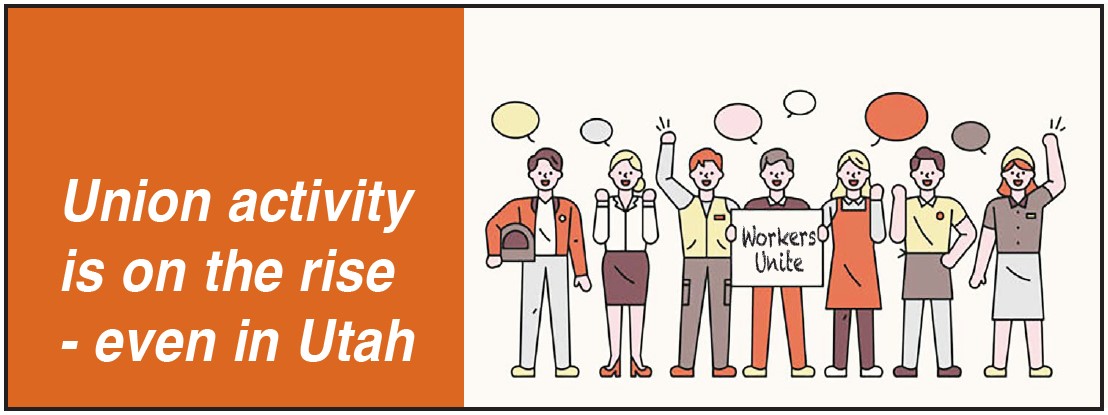
 Utah employers might think that in a deeply “red,” right-to-work state, they don’t need to pay attention to organized labor or the administrative actions of the NLRB. That would be short-sighted. Unionization has come to Utah. Recent organizing among mechanics and electricians at the Park City ski resort and at several local Starbucks outlets are consistent with nationwide trends reflecting a significant uptick in union activity. Utah is not immune to union organization and employers would be wise to take notice of recent developments.
Are unions a potential threat to Utah employers?
Yes. Unionization is a universal response to employee dissatisfaction. With the voice of Biden helping to shape public attitudes, unions are enjoying a level of public support not seen since the 1960s, with 71 percent of Americans expressing approval of labor unions in the most recent Gallop Poll. This general public sentiment, coupled with changing dynamics in the workforce, have resulted in unprecedented increases in the number of petitions for union elections filed with the NLRB in 2022.
As more highly educated, younger and politically progressive people enter the workforce in rank-and-file jobs, we have seen those employees in Utah and other states look to assert themselves in the workplace by seeking a greater voice within their companies. This has led to more organization efforts, both with traditional labor unions and in non-traditional, worker-focused ways.
Some have collaborated with community groups and local religious organizations to amplify a pro-union message. These “new-wave” workers also are adept at using social media to publicize complaints about working conditions and other terms of employment. This ease of communication to large groups makes union organizing far easier today than in the past, when unions had to rely upon surreptitious face-to-face meetings and hallway conversations to spread their message.
For all of these reasons, organized labor is an imminent threat to Utah employers.
What can unions accomplish in Utah as a right-to-work state?
A lot. The mere existence of a right-to-work statute does not eliminate the threat of unionization. Just because employees cannot be forced to join a union does not mean that unions cannot win elections or become a substantial force in a particular workplace. Unions have the legal right under the National Labor Relations Act (NLRA) to communicate their message to employees, campaign and win elections and negotiate collective bargaining agreements.
While Utah’s right-to-work laws mean that employees covered by a union contract cannot be required to become members or pay union dues, unions can attempt to persuade employees that they should actively participate by engaging in union activities while paying dues.

What effects would unionization have on Utah workers?
A union message can be convincing. Unions traditionally promise employees higher wages, better benefits, safer workplaces and a voice in business operations. Today, we are seeing new categories of issues driving unionization efforts, such as demands for predictable scheduling, increased staffing, remote work, non-discriminatory treatment, an end to workplace harassment, changes in corporate governance and policy — and the right to not report to a haunted workplace (yes, that is true).
But wait, there’s more.
Separate and apart from NRLB efforts to protect and enhance union rights to organize, the board’s general counsel, Jennifer Abruzzo, has made clear that she wants her agency to investigate non-union workplaces for what she believes to be unlawful policies and practices covering topics such as:
• Employee use of the employer’s email systems for purposes of unionization or to discuss other workplace concerns.
• Uniform policies and dress codes.
• Employee access to the employer’s property after hours.
• Confidentiality for internal investigations and business information.
• Workplace codes of conduct, such as non-disparagement policies and civility rules.
• Employment arbitration programs.
• Clarification on the definition of independent contractors.
• Photography and audio recordings in the workplace.
Even employers not facing a union organizing campaign must be vigilant to ensure their policies and handbooks are defensible if challenged by the NLRB.
But wait, there’s still more.
Even more importantly, employers must be aware that employees coming forward to complain or protest about a long litany of workplace issues also enjoy protections under the NLRA that will be aggressively defended by the board. This is “protected concerted activity.”
As current NLRB Chairman Lauren McFerran said last year, “You know, I don’t think anyone, when the act was passed, would have contemplated that it would potentially be used by their 2020 counterparts to join together and demand personal protective equipment during a pandemic, or to challenge the denial of employment protections in a gig economy, or to talk about the silencing of harassment victims. But in my view, it is manifestly clear from the plain language of the act that it does protect all of this and more.”
Conclusion
Utah employers enjoy the advantages of being located in one of the most beautiful parts of the country and one with manageable governmental regulations at the state and local level. But we are not immune from national trends. And Utah’s employers would be well-advised to pay close attention to national trends and developments under the National Labor Relations Act as they structure their go-forward business operations.
Steven Suflas, attorney of counsel at the law firm Holland & Hart in Salt Lake City is a labor and employment with more than four decades of national experience providing strategic counsel and guidance to help employers navigate the challenges of operating compliant, productive workplaces.