

Investing in the alternative
Air quality is a matter everyone cares about — especially in Utah, a state that experiences some of the nation’s most extreme winter inversions. When inversion conditions combine with high levels of particulate matter (PM2.5) the air pollution is trapped and concentrated, producing poor air quality and affecting the health of everyone living throughout the Wasatch Front.
While many believe air pollution is the result of big business, manufacturing and mining, the reality is, vehicles are the primary source of precursor emissions for PM2.5 pollutants.
It’s your car, my car and anyone else's car driving down the road on a day-to-day basis that is producing nearly two-thirds of the typical winter workday emissions, with the second- most contributing sources actually coming from homes and buildings.
The small choices millions of Utahns make each day affect air quality. When and how frequently you drive, how often you mow your lawn, what degree you set your thermostat at, etc.
“Law is important, regulation is important, rules are important, but it will be the community who will help us clean the air,” said Ted Wilson, executive director of Utah Clean Air Partnership (UCAIR).
In the past few years, a major Utah construction entity has stepped-up in recognizing the part it plays in vehicle emissions.
Geneva Rock Products, a 63-year-old Utah construction company, has made a sizable investment in clean energy.
In January, the company held a ribbon-cutting ceremony for its new natural gas fueling station and 25 compressed natural gas (CNG) concrete mixer trucks. This $8 million fleet and facility — just part of a $30 million investment in clean air initiatives — is the equivalent of taking 8,000 cars off the road each year.
According to the Utah Clean Cities Coalition, natural gas is an abundantly available, domestic fuel with inherently cleaner burning qualities. In terms of emissions, the science is simple. CNG burns one carbon versus diesel burning 14 carbons. The air shed of the valley benefits exponentially from a move to alternative fuels.
Geneva Rock’s 400-horsepower CNG engines emit approximately 50 percent less PM2.5, 40 percent less carbon dioxide, 90 percent less carbon monoxide, and 35 to 60 percent less nitrogen oxides when compared to their traditional diesel-fueled counterparts. The mixers also use 100 percent American-produced fuel.
“Lowering our emissions is of utmost importance to us as a company and guides our overall operating decisions,” said Jim Golding, president of Geneva Rock, in a press release distributed for the event. “We’re going to continue to raise the standard in environmental stewardship.”
The company didn’t start with its fleets. Its transition to clean energy and environmental conservancy has been a part of the culture for decades.
In 2013, Geneva Rock built a state-of-the-art, zero-waste watering system at its Point of the Mountain operation to reduce dust that is typically conjured from regulated mining activity. The structure goes far above and beyond Utah Division of Air Quality, OSHA and MSHA standards and by some accounts, is the most extensive and expensive dust-control solution of its kind ever done in Utah by a sand and gravel company.
High-power water cannons, sprinklers and water trucks — most visible from the freeway — re-use existing water found on the property to enhance standard dust control techniques. Last year, the company improved its air quality ratings and recycled 1.7 billion gallons of water using this irrigation structure.
To add to its energy efficiency at the Point of the Mountain operation, Geneva completed a conveyor belt system to transport materials in 2014. Instead of hauling materials across the mountain facility in large construction equipment to crushing plants and pit piles at the base, the gravity-fed overland conveyor belt moves the material for them at a dust-free, energy-generating pace. The material handling system transports 3,500 tons of sand and gravel per hour, moving the aggregate more than 2,550 feet at 400 feet per minute. The weight of the material moving at a downward incline of up to 19 percent produces excess energy to run other operations at the plant.
Geneva Rock’s conveyor solution generates enough clean energy to support 127 homes each year.
According to engineers from Superior Industries, as reported in their interview with Pit & Quarry magazine, another major driver behind the investment in an overland conveyor system is the reduction of particulate matter in the air. Highly scrutinized due to tightening environmental regulations, individual wheeled haulage units, such as dozers, loaders and haul trucks, emit and stir pollution along the entire transfer path. Superior engineers argue that overland conveyor systems offer quiet and almost dust-free operation
Beyond taking responsibility for its own equipment and facilities, Geneva hopes to be a community partner in supporting changes for good, said Golding. Geneva Rock donated $25,000 to UCAIR to support local grants and education programs in 2017.
UCAIR is a statewide clean air partnership that works with individuals, businesses and communities to make changes to improve Utah’s air quality. Programs include Air Assist for small businesses, Innovator’s Competition for air quality grants and targeted grants for promoting individual behavior changes.
“We all share ownership and responsibility for Utah’s air quality,” Wilson said. “We applaud Geneva Rock for leading its industry in contributing to a better air quality solution. There is no silver bullet to solving Utah’s air quality, but every small change adds to a collective bigger step toward better health, a better economy and better overall quality of life for all of us.”
It’s exciting to see how the changes of one organization can produce benefits for the entire state. Just think of the improvements we could make as a community, if each person took the opportunity to assess their choices and make changes for the better.
Ray Gammell is the vice president of equipment and facilities at Clyde Companies in Orem. He oversees the operation of more than 75 locations and directs purchasing and maintenance of a vehicle and construction equipment fleet that exceeds 9,000 units.
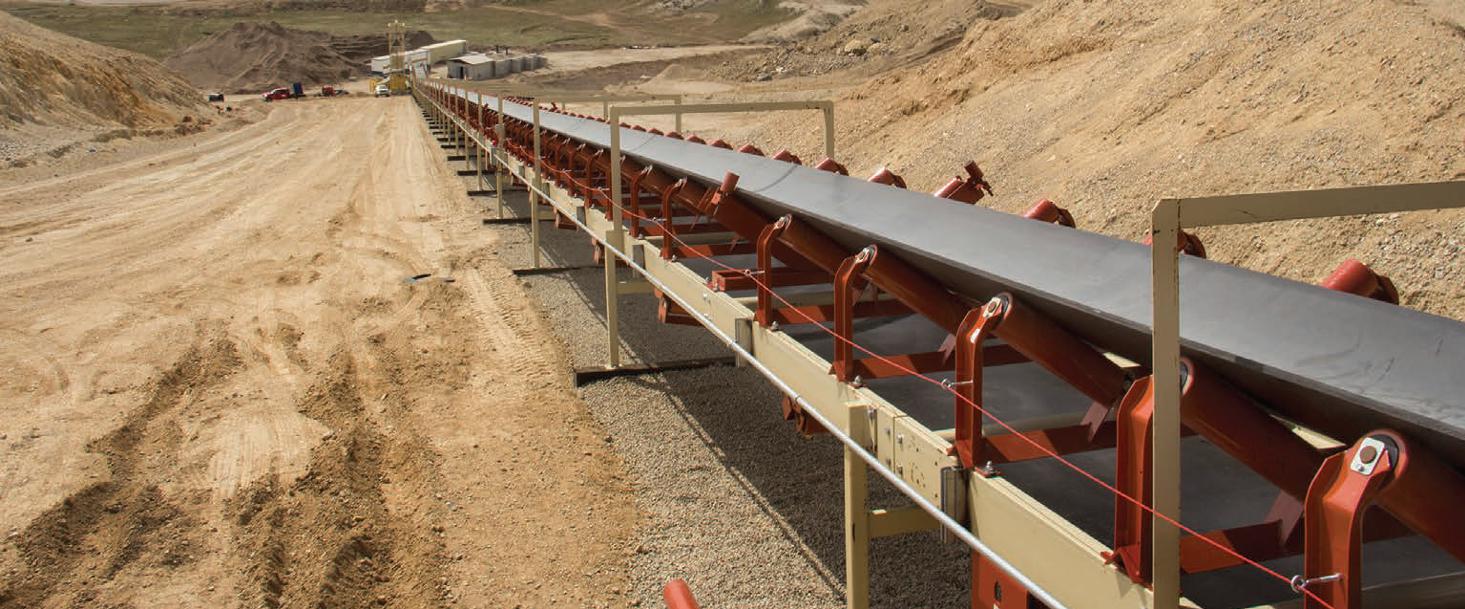
When product is going downhill at the Geneva Rock quarry, gravity moves the conveyor belt system with enough force to generate electricity that can be used to power other parts of the operation.